


Cryotherapy
targeted treatment using cold
Cryotherapy uses targeted cold, usually liquid nitrogen, to gently freeze and destroy altered tissue. This fast and effective procedure is suitable for many superficial skin conditions and allows for precise treatment without major invasiveness.
- Treatment of warts and actinic keratoses
- Removal of minor skin lesions
- Gentle, fast procedure
| Especially suitable for |
• Warts and stubborn skin growths |
| Side effects |
Temporary redness, swelling, blistering or crusting at the treated area. |
| effect |
• The altered skin areas disappear |
| durability |
Permanent, provided the treated areas have completely healed. |
Treatment details
👉 Note: In the first few days after treatment, you should avoid saunas, solariums and intense sun exposure.

Length of time
Depending on the size of the lesion, a few minutes

season
Available all year round

Type of treatment
Minimally invasive

Post-treatment
Monitoring of skin healing, wound care if necessary.

anesthesia
Usually not required

Downtime
Minimal, depending on the area

Cost
Usually covered by health insurance (except for aesthetically bothersome lesions)
Treatment process
Treatment process
- Consultation & analysis of skin changes
- Preparing the area
- Application of liquid nitrogen
- Aftercare: Cooling, wound care if necessary, and monitoring of healing.
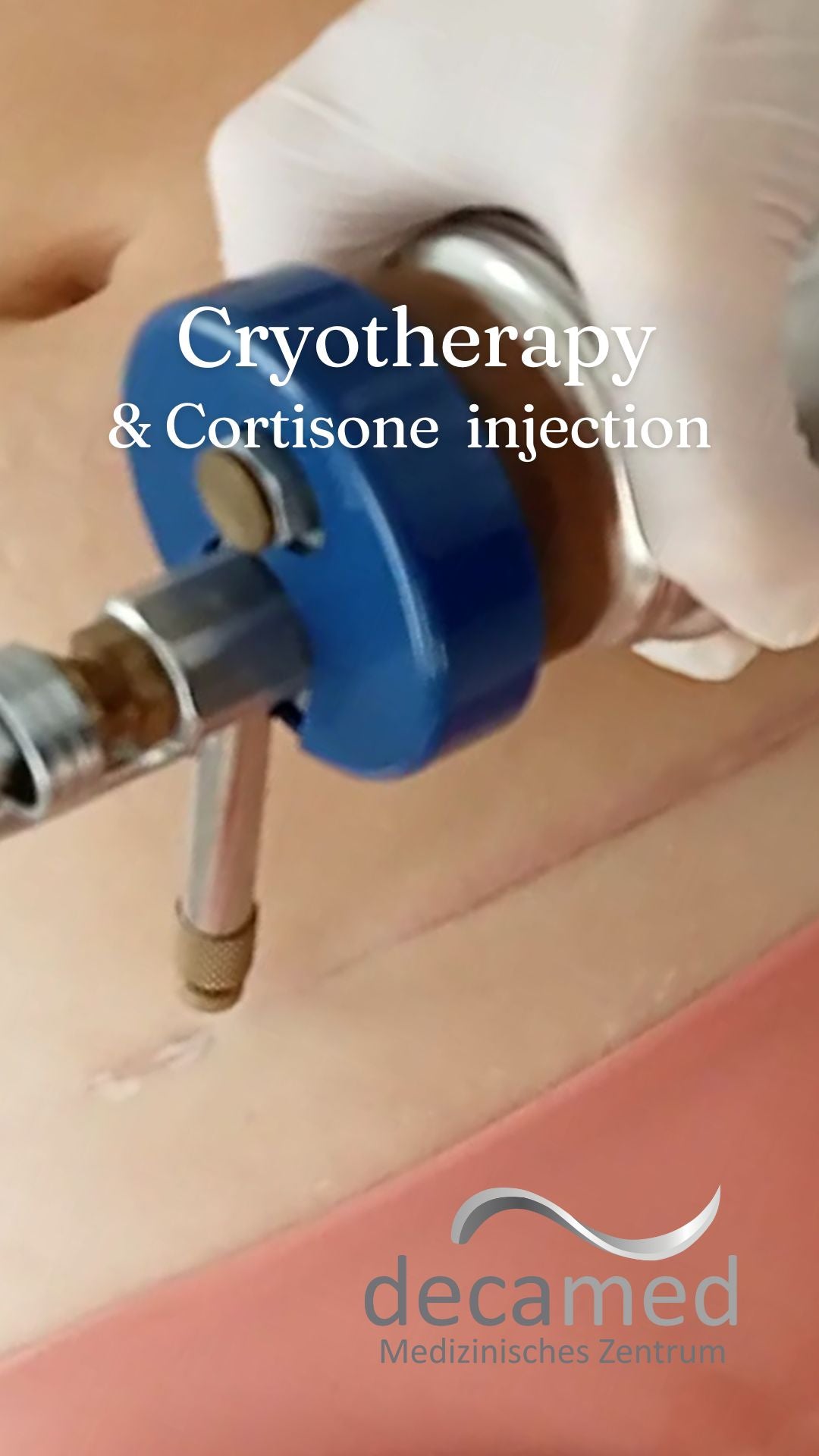
Treatment of a hypertrophic cesarean section scar
In some cases, a hypertrophic scar may develop after a cesarean section. This scar is often reddened, thickened, raised, and may itch or feel tight. Unlike a keloid, however, the scar remains confined to the original wound area and does not grow beyond the scar boundaries. To bring the scar back to skin level and alleviate discomfort, we at DECAMED recommend a combined medical therapy.
Step 1: Cryotherapy (treatment with liquid nitrogen) Targeted application of cold can reduce excess scar tissue. At the same time, cryotherapy has a pain-relieving effect and facilitates the subsequent injection.
Step 2: Intralesional cortisone injection In the next step, a diluted cortisone solution is injected directly into the scar tissue using a fine needle. This treatment helps to soften the scar, reduce inflammation, and reduce the elevation of the scar.
Usually, 2–3 treatment sessions at intervals of 4–6 weeks are sufficient to achieve a significant flattening of the scar. Once the scar is flat, complementary laser treatment can be considered to further improve the appearance of the skin. An individual medical consultation is crucial in order to determine the appropriate form of therapy.