


Sclerotherapy
Targeted treatment of spider veins
Sclerotherapy is an effective method for selectively obliterating small veins, known as spider veins. A solution (Aethoxysklerol® or polidocanol) is injected directly into the affected vein. Polidocanol is a detergent (soap-like substance) which, after injection, destroys the endothelial cells of the vein, i.e. the inner wall of the vessel. The damage to the endothelium causes controlled inflammation of the vessel wall. The vein walls stick together and the vessel is functionally closed. In the following weeks to months, the closed vein is converted into connective tissue strands and eventually broken down by the body. Aethoxysklerol acts locally and has hardly any systemic effects. It is easy to dose (depending on the concentration for spider veins to larger varicose veins) and also has a slight local anaesthetic effect, i.e. the injection hurts less.
- Treatment of spider veins on the legs
- Gentle, outpatient procedure
- Possible without surgery
| Especially suitable for |
• Cosmetically bothersome spider veins on the legs |
| Side effects |
• Minor bruising, hardening, or pigment spots may occur. |
| effect |
• Spider veins fade or disappear |
| durability |
• In the long term, however, new spider veins can develop. |


Treatment details

Length of time
15–45 minutes depending on the area

season
Available all year round

Type of treatment
Minimally invasive, outpatient

Post-treatment
Compression stockings, rest and monitoring of the treated areas

anesthesia
No anesthesia or local anesthesia if needed

Downtime
Minimal

Cost
On request, depending on the area and number of sessions
Treatment process
Treatment process
- Consultation & analysis of the affected veins
- Preparing the area
- Injection of the sclerosing agent
- Short-term compression & aftercare instructions
Why is compression important after sclerotherapy treatment?
Why is compression important after sclerotherapy treatment?
After sclerotherapy with Aethoxisklerol®, the treated vein is damaged but not yet permanently closed. Subsequent compression is important because it presses the vein walls tightly together, thereby supporting the desired closure. This prevents the vein from filling with blood again and reopening. At the same time, compression reduces the formation of larger thrombi and instead promotes the conversion of the vein into connective scar tissue. It also reduces pain, inflammation and the risk of hardening or skin discolouration. Overall, compression improves the success of the treatment and contributes to a better functional and cosmetic result. During the consultation, the doctor at Decamed will give you a prescription for compression stockings. Please bring the stockings with you to the treatment. We generally recommend wearing the compression stockings consistently for the first 24 hours. After that, they should only be worn during the day for another week.
What are the potential risks and side effects of sclerotherapy?
What are the potential risks and side effects of sclerotherapy?
Sclerotherapy is generally a safe and well-established procedure. However, as with any medical treatment, side effects and risks can occur, which are usually temporary.
Common and usually harmless side effects include redness, swelling, a feeling of pressure or tightness in the treated area, and small bruises at the injection sites. Also relatively common are hardening or palpable cords, which result from the desired vascular reaction and usually disappear within a few weeks.
Occasionally, inflammation of superficial veins (superficial phlebitis) or brown skin discoloration (hyperpigmentation) along the treated vein may occur. These are usually temporary but can last for several months.
Rather side effects include blistering or small skin necroses, especially if the sclerosing agent accidentally leaks outside the vein. Very rarely, allergic reactions to the sclerosing agent can occur.
In rare cases, foam sclerotherapy can cause temporary headaches, visual disturbances, or dizziness, which usually subside quickly. Serious complications such as deep vein thrombosis, pulmonary embolism, or persistent neurological symptoms are extremely rare.
The risk of side effects can be significantly reduced through proper technique, appropriate dosage, compression therapy, and early mobilisation.
How long do the results last?
How long do the results last?
With few dilated capillaries and good connective tissue, the results of sclerotherapy are generally long-lasting, as the treated veins are permanently closed and transformed into connective tissue.These vessels cannot regenerate.If many spider veins are present, two to three sessions may be necessary initially.
However, sclerotherapy only treats the existing, visible veins, not the underlying venous insufficiency.Therefore, new varicose veins or spider veins can develop in other areas over time.
How long the result lasts depends on several factors, including:
- the type and size of the treated vein
- individual predisposition
- hormonal factors (e.g., pregnancy)
- occupational stress (prolonged standing or sitting)
- consistent use of compression garments when needed
Many patients benefit from the treatment for several years.Follow-up treatments at longer intervals can be useful to maintain the result in the long term.
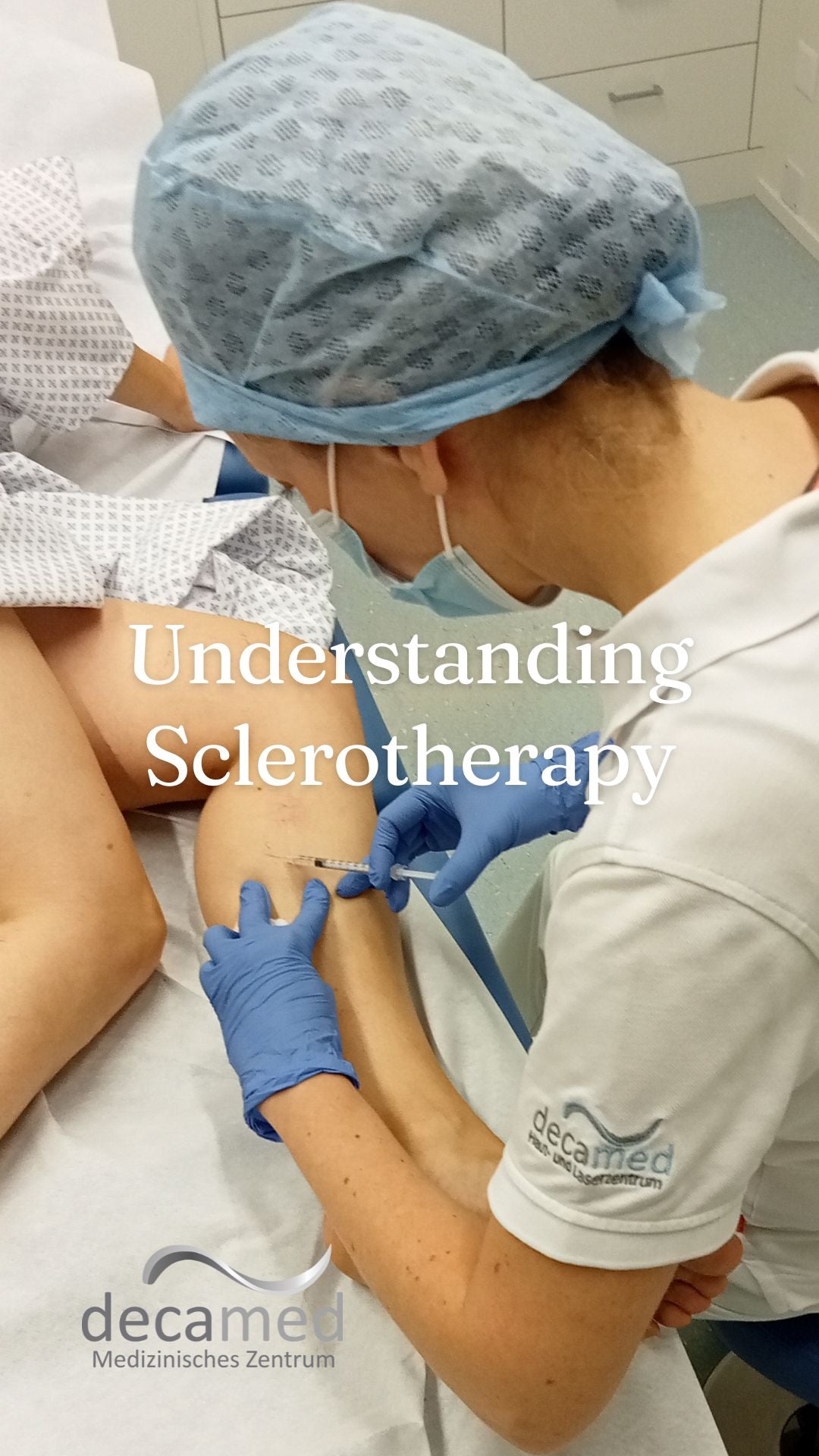
Understanding Sclerotherapy
Sclerotherapy is a proven and gentle procedure for treating spider veins and small varicose veins. The video shows the individual phases of the treatment and how the body supports the healing process.
1. Treatment of spider veins: The treatment is performed specifically on the affected veins. After a careful assessment of the skin and blood vessels, the sclerotherapy is precisely planned.
2. Injection of the sclerolytic agent: A special sclerosing agent is injected directly into the affected vein using a very fine needle. This agent irritates the vein wall in a controlled manner and initiates the desired closure of the vein.
3. Fading of the vein: Immediately after the injection, the vein may visibly fade or contract. This is a good sign that the treatment is working and the vein will gradually recede. In the following weeks, the body breaks down the treated vein on its own.
4. Application of compression bandages: After the treatment, gauze pads are applied to the treated areas to exert targeted pressure on the blood vessels. This supports the closure of the vein and improves the treatment outcome.
5. Wearing compression stockings. Compression stockings should then be worn for at least 24 hours (longer depending on the findings). Compression promotes healing, reduces side effects such as swelling or bruising, and contributes significantly to the success of the therapy.
Sclerotherapy is an outpatient procedure, requires no downtime, and can be performed in several sessions depending on the severity of the veins. The final result becomes apparent gradually over several weeks.