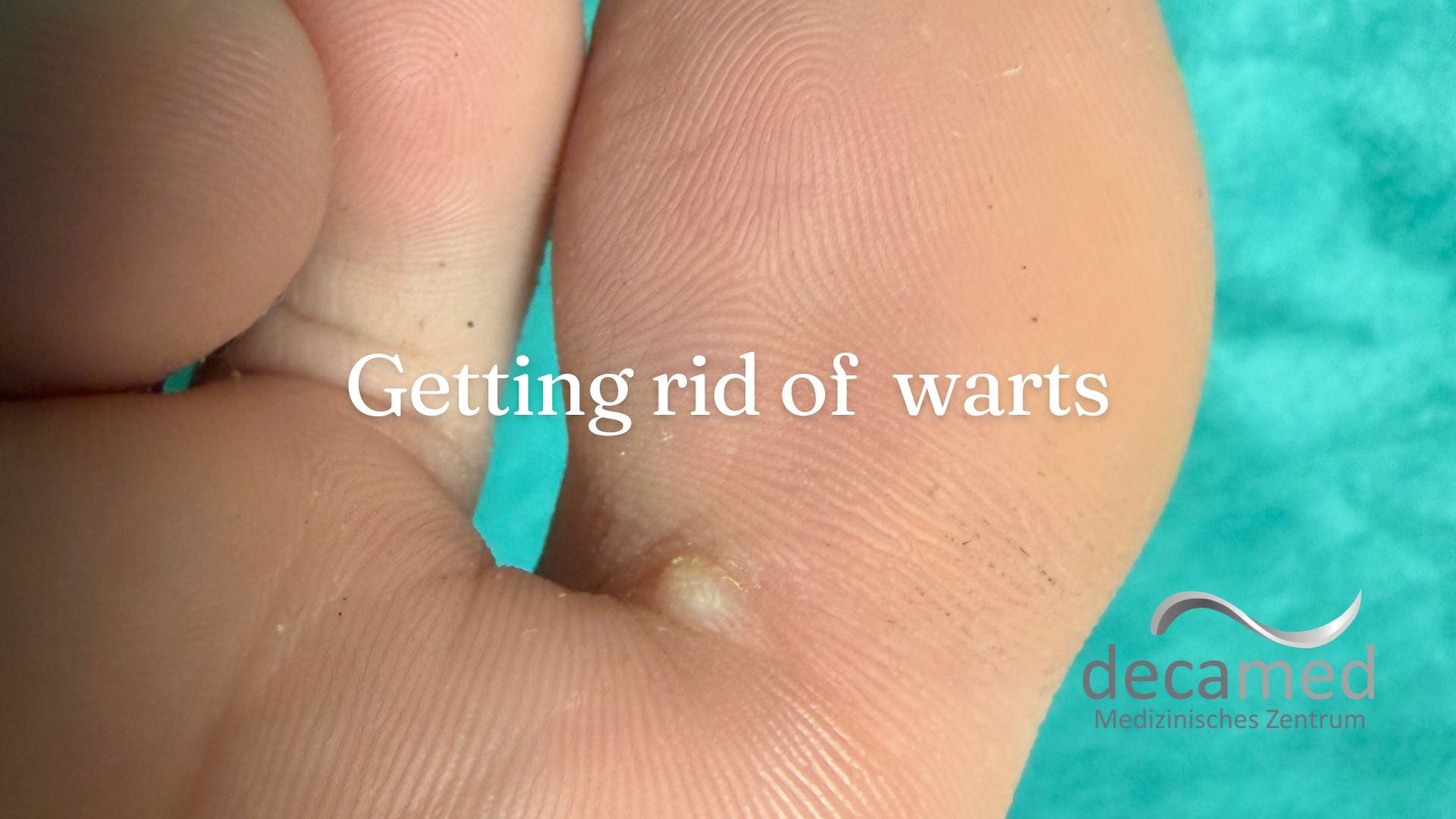


warts
Warts are benign but contagious skin growths caused by human papillomavirus (HPV). They commonly appear on the hands, feet, or face and are particularly widespread in children. Although warts are harmless, many sufferers find them bothersome or unpleasant – and if left untreated, they can spread or infect other people.
At the Decamed Skin and Laser Center, we offer modern, low-pain and highly effective therapies that are individually tailored to the type of wart and skin type.
Table of Contents
- What are warts?
- Causes & Transmission
- Types of warts
- Symptoms & typical locations
- Diagnostics at the dermatologist
- Treatment options
- Cryotherapy & modern procedures
- Prevention tips
- FAQ
1. What are warts?
Warts are viral skin growths caused by HPV. The infection leads to increased keratinization of the skin, resulting in raised, rough, or hardened lesions.
You can:
- appear individually or in groups
- be painless or sensitive to pressure
- disappear spontaneously, but also remain persistent.
2. Causes & Transmission
2. Causes & Transmission
Warts are caused by contact with HPV viruses. Infection occurs particularly easily through:
- communal showers or swimming pools
- minor skin injuries
- direct skin contact
- Moisture & softened skin
Children and people with sensitive immune systems are particularly vulnerable.
INFOBOX:
Warts are contagious but completely harmless. Treatment prevents them from spreading to other parts of the body or to other people.
3. Types of warts
3. Types of warts
Depending on the body part and appearance, one distinguishes between:
Common warts (ordinary warts)
- often on fingers and hands
- rough, calloused surface
Plantar warts (verrucas)
- on the sole of the foot
- growing inwards → often painful
Flat nipples
- smooth, flat papules
- often in the face
- especially in children
Mosaic warts
- several small wart patches
- often on the feet
Genital warts
- in the intimate area
- sexually transmitted (separate treatment required)
4. Symptoms & typical locations
4. Symptoms & typical locations
- keratinized, raised or flat papules
- dot-like black spots (thrombosis of small vessels)
- painful pressure from verrucas
- cosmetic impairment of the face and hands
5. Diagnostics at the dermatologist
5. Diagnostics at the dermatologist
Clinical assessment
The typical skin appearance is usually sufficient for diagnosis.
Dermoscopy
Helps to distinguish warts from corns, calluses or moles.
In case of unclear findings:
- Removal or biopsy (rarely necessary)
6. Treatment options
6. Treatment options
Not every wart requires treatment, but medical treatment is recommended for painful, cosmetically bothersome, or persistent warts.
Treatment options:
- Cryotherapy (freezing)
- Laser therapy
- Keratolytic solutions (e.g., salicylic acid)
- Curettage (gentle removal)
- Immunomodulating creams
7. Cryotherapy & modern procedures
7. Cryotherapy & modern procedures
Cryotherapy (freezing)
One of the most effective and frequently used methods:
- liquid nitrogen (-196 °C)
- Rapid freezing → destruction of viral tissue
- usually well tolerated
- Especially suitable for common warts and verrucas.
A blister or scab often forms after treatment; this is normal and a sign of the healing process.
Laser therapy
Ideal for very stubborn or painful warts:
- pinpoint destruction of the wart tissue
- especially suitable for plantar keratinized tissue
- low relapse rate
8. Tips for prevention
8. Tips for prevention
✔ No barefoot in swimming pools/changing rooms
✔ Keep skin dry
✔ Treat minor injuries
✔ Do not share towels & bathing shoes
✔ Do not manipulate warts → risk of infection
9. FAQ – Frequently Asked Questions
9. FAQ – Frequently Asked Questions
Are warts contagious?
Yes, warts are transmitted by HPV viruses.
Do warts go away on their own?
Partly yes, especially in children, but this can take months to years.
How many treatments will I need?
Usually 5-7 sessions, more for stubborn warts.
Does the treatment hurt?
Cryotherapy may cause a brief burning or stinging sensation, but it is generally well tolerated.
Do warts come back?
Possible, depending on the immune system and virus reactivation.
Conclusion
Conclusion
Warts are harmless, but often bothersome and contagious. With modern, gentle methods such as cryotherapy, laser treatment, and medical solutions, they can now be removed very effectively and permanently. This allows the skin to become smooth, healthy, and free of calluses again.